
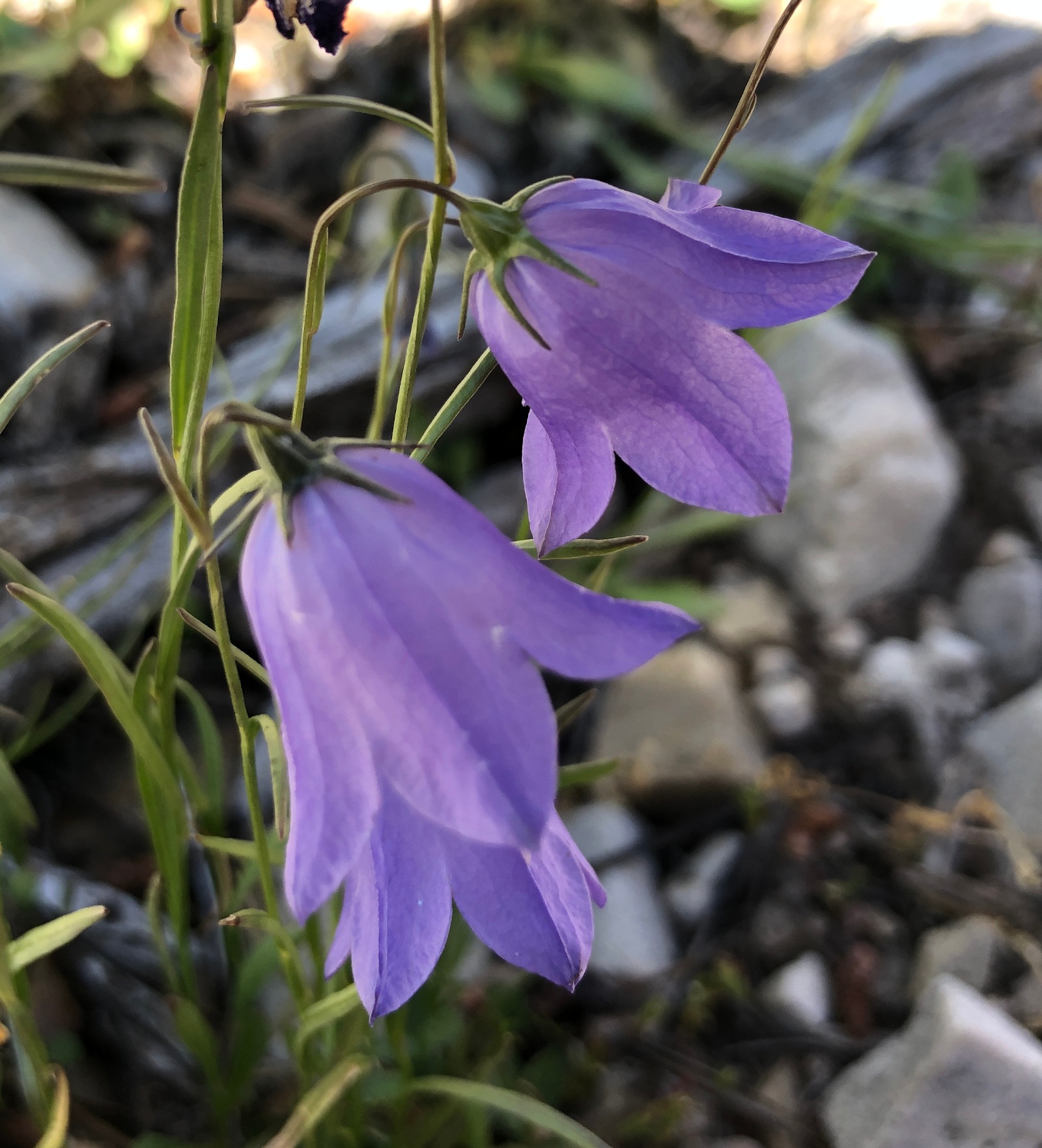
There are many species of the Campanula genus around the world, and they are all considered edible, although some have better reports of edibility and some are not so great. My local species is Campanula rotundifolia, and it is one of the not-so-great ones.
Most Campanula species have a common name which is a variant of either Harebell or Bellflower, and this species also known by both of those names. It is also called Bluebells, especially in Scotland, but here in the Mountain West, Bluebells refers to flowers in the Mertensia genus. Bellflowers is a good description, because they are largish bell-shaped flowers, which hang down like a bell would. But this species is usually called Harebells.
The flowers themselves are the best edible part of this species. They are tender, and have a good taste, which seems both mildly sweet and mildly savory to me. They would make an attractive addition to a salad.
The leaves are rather tough, and develop a bit of bitter taste by the time I finish chewing them. The latin species name, rotundifolia, translates to "round leaves", but these plants have long thin leaves (lanceolate).
Some Campanula species have roots which are good to eat, but this species has long, thin, creeping roots. They are fairly small and difficult to follow in order to dig them up. Even after boiling for ten minutes, they are too bland, tough, and small to be worth the effort of digging for.