
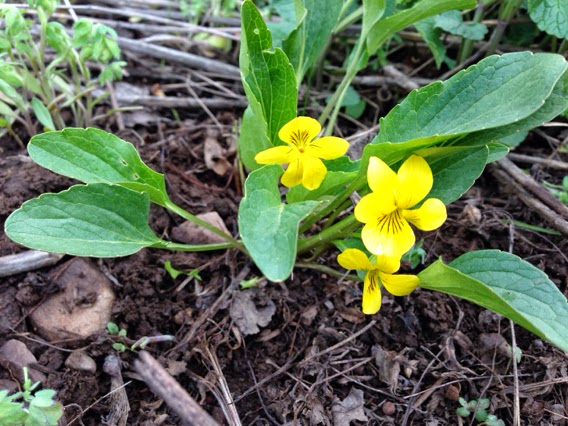
Violets are a common flower in the spring. In our mountains there are several species which are very common including Viola purpurea (yellow), Viola nuttallii (yellow with oval leaves), Viola adunca (blue), Viola canadensis (white), and Viola papilionacea (purple). It's not very important which species you find. The constant need for new botanical publications from academia has made this one of the genuses which has been nit-picked beyond any useful purpose.
The leaves and flowers are usually eaten raw in salads. The flowers taste good, and the spur on the back of the flower is a container for nectar, which gives the flowers their sweetness. The leaves are not quite a good as the flowers; they taste good, but are a little tough.
The leaves are said to thicken soups "like okra". If you are not a gumbo veteran, that means they thicken the soup by giving it a mucilaginous (slimy) quality. The leaves themselves become quite mucilaginous when cooked. When raw, the mucilaginous quality is somewhat noticeable as you chew them up, especially if you are looking for it. This can be helpful for soothing your throat, and I have chewed violet leaves to remove the burny sensation after eating many glacier lilies or evening primroses.