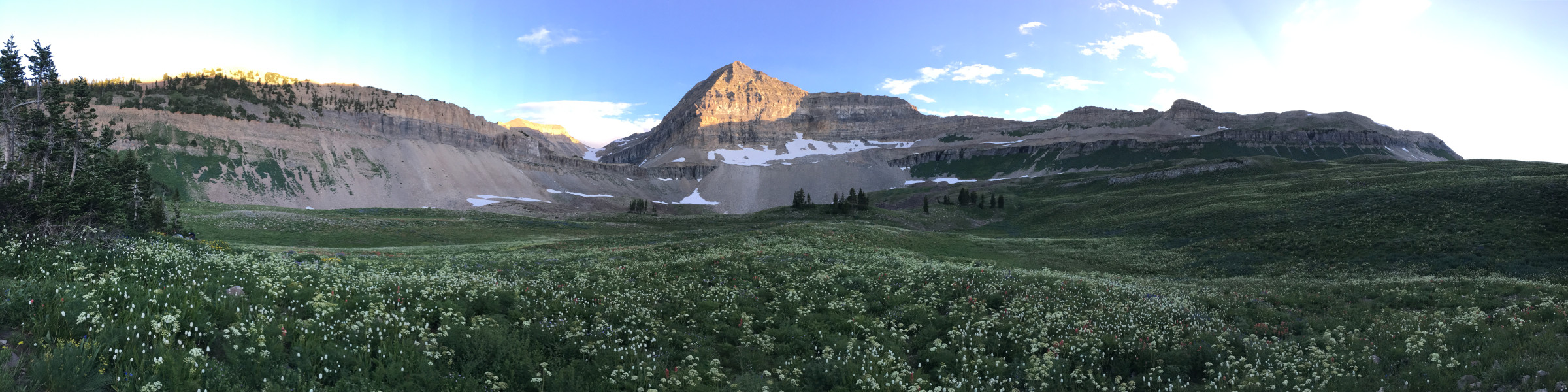
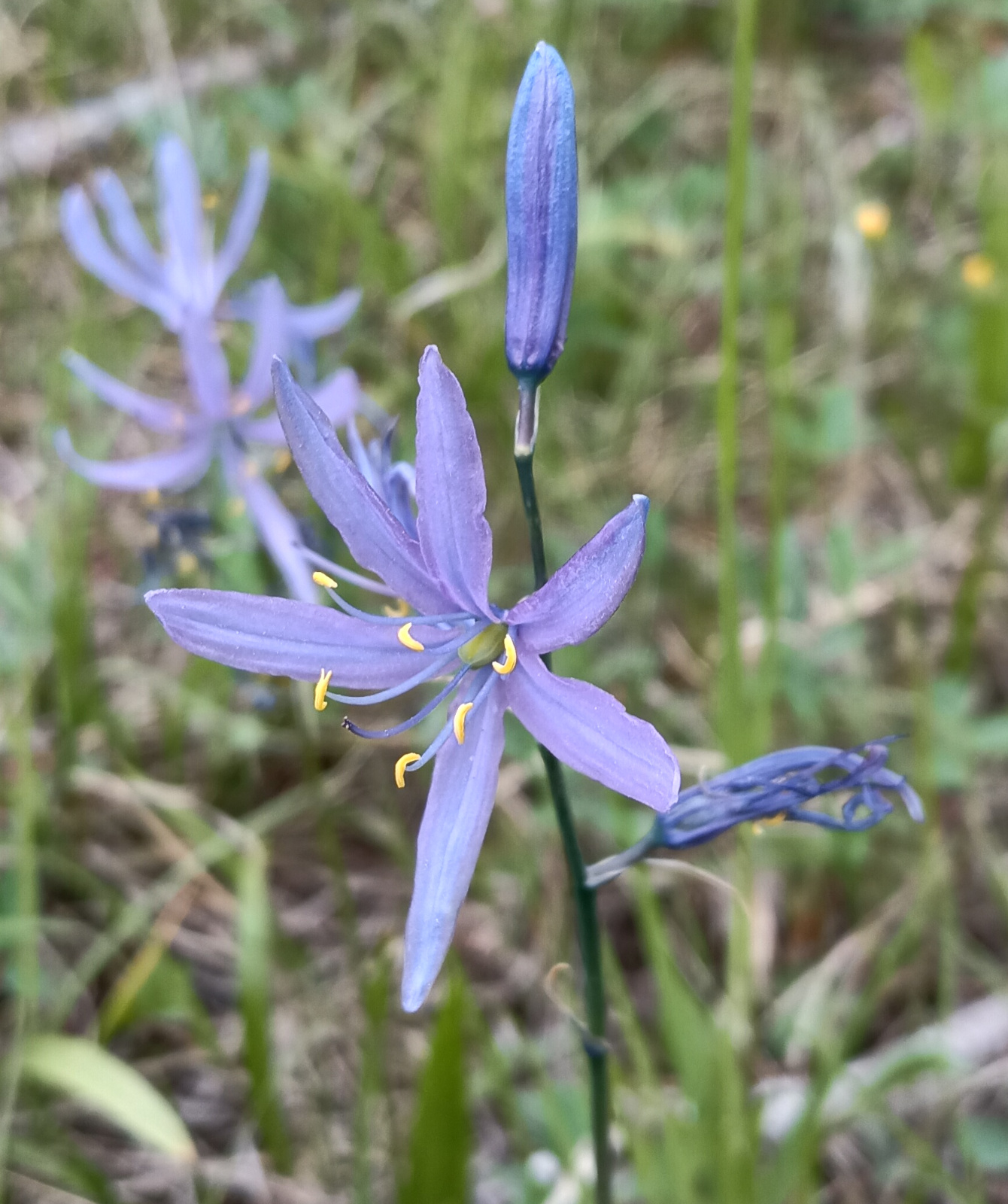
Blue Camas is a good edible bulb which was a staple for Native Americans in the northwest. The botanical name Camassia quamash comes from the Anglicized name for the plant, camas, and a Native American name for the plant, quamash. It was important enough that they started a war over it.
"Most settlers had passed on beyond the Bannocks’ Camas Prairie but near harvest time in May 1878, some careless travelers turned their hogs loose upon the prairie to forage to their hearts’ delight. They were soon followed by several more itinerant settlers who let horses and cattle graze upon the blue-flowered field. May was gathering season but suddenly for the Bannocks, after thousands of years, there was nothing left to gather. A series of raids unleashed outright war for the Bannocks and those other affiliated tribes who hoped to rebuke the settlers." -- Important Foods: Camas, Mary Rose, 2017
Camas seems to like growing in meadows which get plenty of water in the spring, but dry out in the summer. It does all its growth in the spring, and then the dry summer makes it less hospitable for competing plants. True to what the above information implies, I found Blue Camas growing where cattle were not allowed to graze, but nearby past a fence, where cattle could graze, I could not find any Camas growing.
It is easily recognizable when flowering in the spring from the blue or purplish flowers with long thin petals. It is important not to confuse it with Death Camas (Zigadenus species) which can grow in the same area, but have smaller white flowers. For that reason it is best to dig them when in bloom, so you can be sure of the correct species. But if you observe them well over time, you can learn to recognize them when in seed as well, since the blue petals dry up, but often do not fall off, remaining as thin blue lines on the outside of the seedpods. But you should be careful to only keep bulbs which are attached to a flower stalk, so that you can be sure to get the right root.
Digging the bulbs is not very hard. The are about 4 inches beneath the surface. By pushing my hori-hori digging tool down on all four sides I loosen up a clod of dirt, which comes out easily if there is not too much grass around. The bulb is then found within or at the bottom of this dirt. Take the bulb, and refill the hole with the dirt.
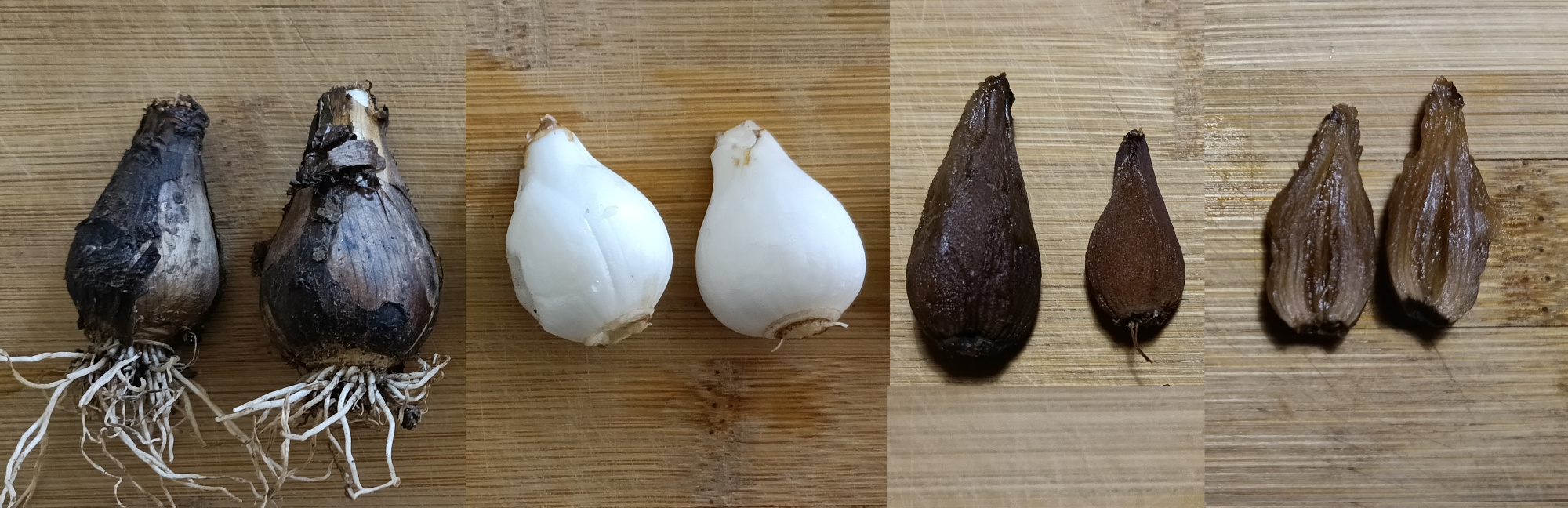
cooked (whole and sliced open)
The bulbs have a dark outer layer which comes off fairly easily. The inside is white, but the last thin light brown dried layer may not come off very easily. This can be left on for cooking, since they need to be cooked for a very long time.
The reason they need to be cooked for a long time (at least 18 hours), is because they contain a lot of an indigestible starch called inulin. The long cooking converts this starch into simpler starches and sugars which we can digest and which taste sweeter. The Native Americans would gather a year's supply in the spring, cook it in a roasting pit, and then dry the bulbs to be used throughout the year. For a smaller amount, a crock pot works well for cooking, since the roasting pit keeps a lot of moisture in with the food. You can cook them either in water or by steaming above the water. I tried both ways. The steamed ones turned out a bit dryer, in that the sticky texture of the fully cooked bulb is less pronounced.
Using this method, they are cooked in about 18 hours. You need to add additional water occasionally when it gets low. I cooked mine for 22 hours because I turned it to low at night to be sure the water would not boil off entirely. When raw, the bulbs are white and very mild tasting. They will darken as they cook, and stay bland and starchy until fully cooked.
When fully cooked, the bulbs are dark brown, and have a sweet nutty flavor and a sticky texture. They are good this way. Some of us liked them even better fried with fat and salt, which lessens the sticky texture. The water the bulbs were cooked in is dark and has a syrupy taste, similar to the how the bulbs taste, but also reminiscent of butterscotch. I used this as an addition to sauces.
I have not tried it yet, but John Kallas has used pressure cooking to fully cook Camas bulbs in only nine hours, if you want to find a faster way to process them.