Mountain Edibles

Camassia quamash
Liliaceae

Camassia quamash

Blue Camas

Camassia quamash

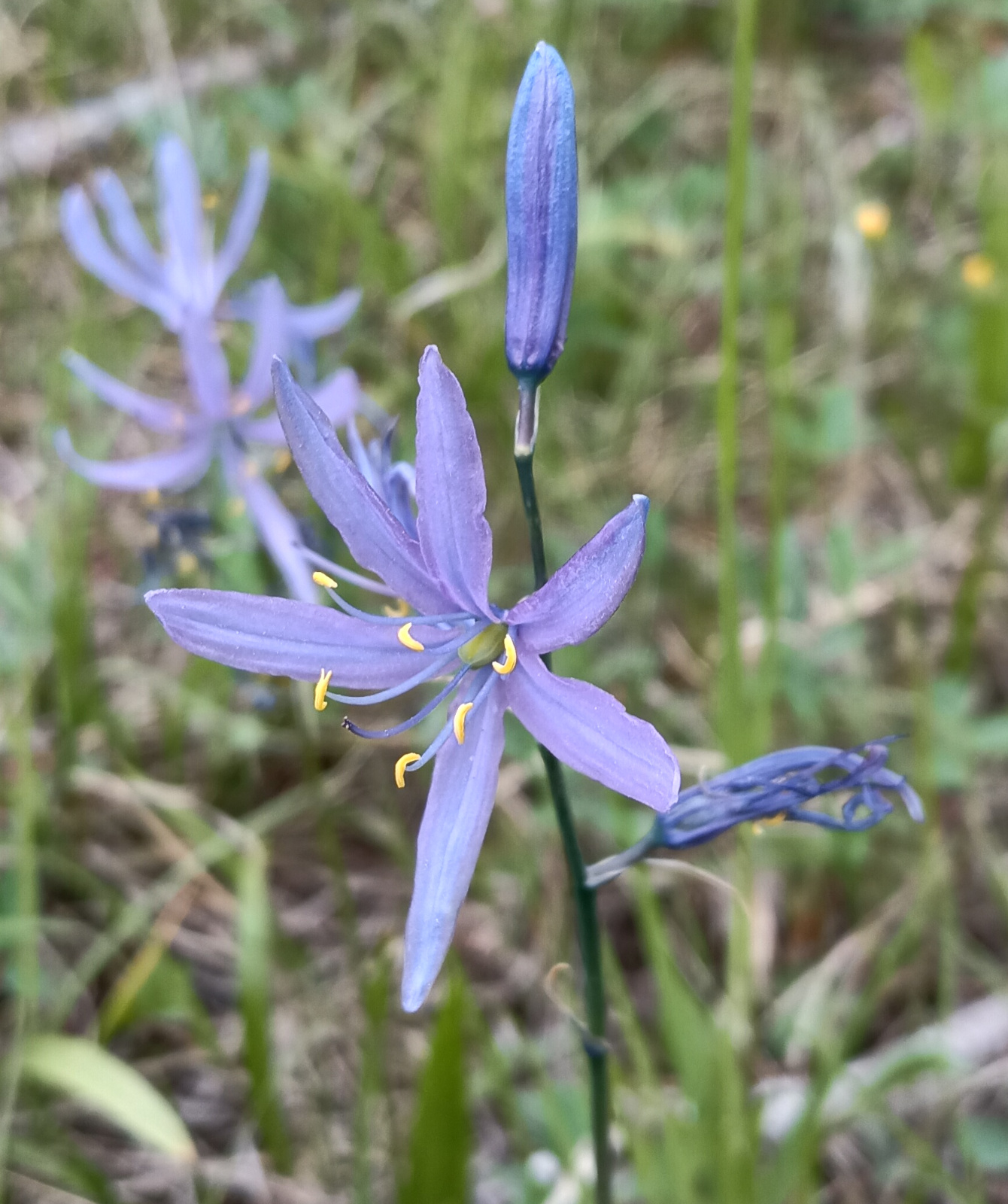
Blue Camas is a good edible bulb which was a staple for Native Americans in the northwest. The botanical name Camassia quamash comes from the Anglicized name for the plant, camas, and a Native American name for the plant, quamash. It was important enough that they started a war over it.

"Most settlers had passed on beyond the Bannocks’ Camas Prairie but near harvest time in May 1878, some careless travelers turned their hogs loose upon the prairie to forage to their hearts’ delight. They were soon followed by several more itinerant settlers who let horses and cattle graze upon the blue-flowered field. May was gathering season but suddenly for the Bannocks, after thousands of years, there was nothing left to gather. A series of raids unleashed outright war for the Bannocks and those other affiliated tribes who hoped to rebuke the settlers." -- Important Foods: Camas, Mary Rose, 2017

Camas seems to like growing in meadows which get plenty of water in the spring, but dry out in the summer. It does all its growth in the spring, and then the dry summer makes it less hospitable for competing plants. True to what the above information implies, I found Blue Camas growing where cattle were not allowed to graze, but nearby past a fence, where cattle could graze, I could not find any Camas growing.

It is easily recognizable when flowering in the spring from the blue or purplish flowers with long thin petals. It is important not to confuse it with Death Camas (Zigadenus species) which can grow in the same area, but have smaller white flowers. For that reason it is best to dig them when in bloom, so you can be sure of the correct species. But if you observe them well over time, you can learn to recognize them when in seed as well, since the blue petals dry up, but often do not fall off, remaining as thin blue lines on the outside of the seedpods. But you should be careful to only keep bulbs which are attached to a flower stalk, so that you can be sure to get the right root.

Digging the bulbs is not very hard. The are about 4 inches beneath the surface. By pushing my hori-hori digging tool down on all four sides I loosen up a clod of dirt, which comes out easily if there is not too much grass around. The bulb is then found within or at the bottom of this dirt. Take the bulb, and refill the hole with the dirt.
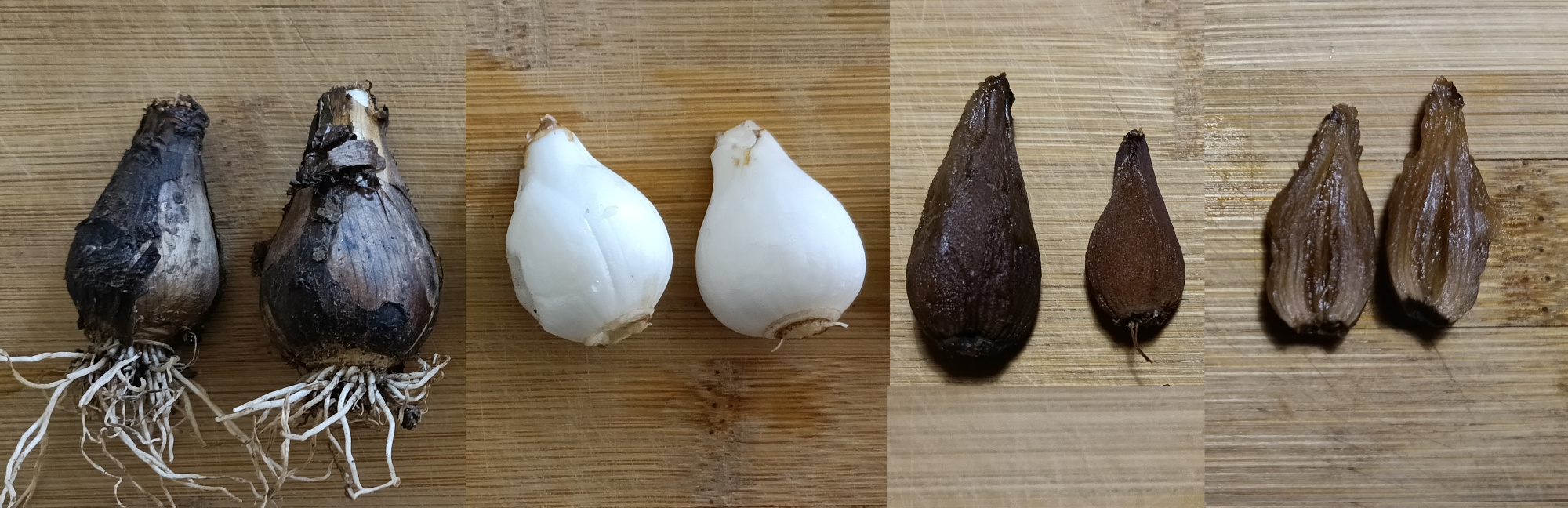
bulbs: raw (unpeeled and peeled),
cooked (whole and sliced open)

The bulbs have a dark outer layer which comes off fairly easily. The inside is white, but the last thin light brown dried layer may not come off very easily. This can be left on for cooking, since they need to be cooked for a very long time.

The reason they need to be cooked for a long time (at least 18 hours), is because they contain a lot of an indigestible starch called inulin. The long cooking converts this starch into simpler starches and sugars which we can digest and which taste sweeter. The Native Americans would gather a year's supply in the spring, cook it in a roasting pit, and then dry the bulbs to be used throughout the year. For a smaller amount, a crock pot works well for cooking, since the roasting pit keeps a lot of moisture in with the food. You can cook them either in water or by steaming above the water. I tried both ways. The steamed ones turned out a bit dryer, in that the sticky texture of the fully cooked bulb is less pronounced.

Using this method, they are cooked in about 18 hours. You need to add additional water occasionally when it gets low. I cooked mine for 22 hours because I turned it to low at night to be sure the water would not boil off entirely. When raw, the bulbs are white and very mild tasting. They will darken as they cook, and stay bland and starchy until fully cooked. 

When fully cooked, the bulbs are dark brown, and have a sweet nutty flavor and a sticky texture. They are good this way. Some of us liked them even better fried with fat and salt, which lessens the sticky texture. The water the bulbs were cooked in is dark and has a syrupy taste, similar to the how the bulbs taste, but also reminiscent of butterscotch. I used this as an addition to sauces.

I have not tried it yet, but John Kallas has used pressure cooking to fully cook Camas bulbs in only nine hours, if you want to find a faster way to process them.

Foraging at the Utah Outdoor Recreation Summit

Foraging at the Utah Outdoor Recreation Summit

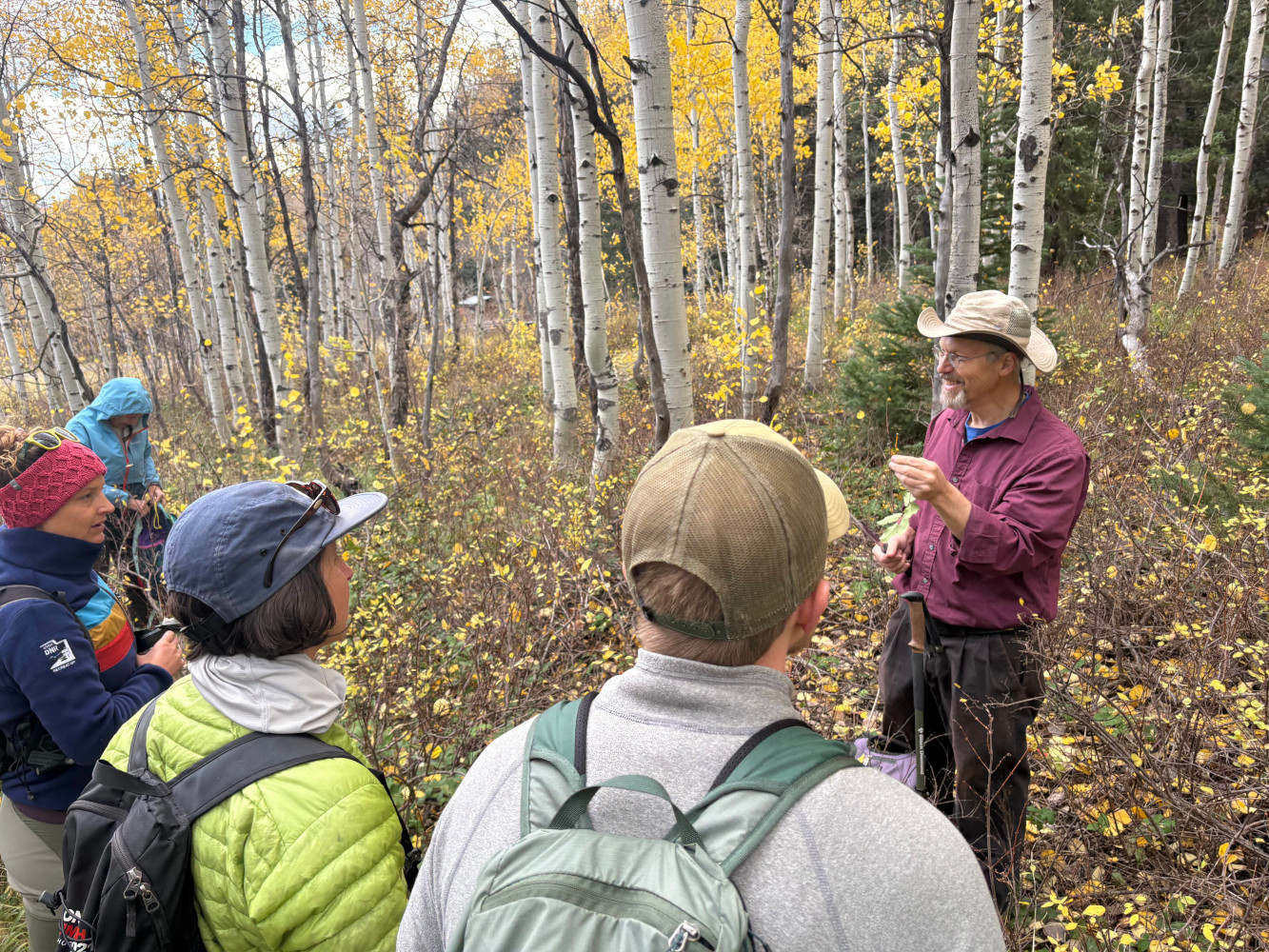
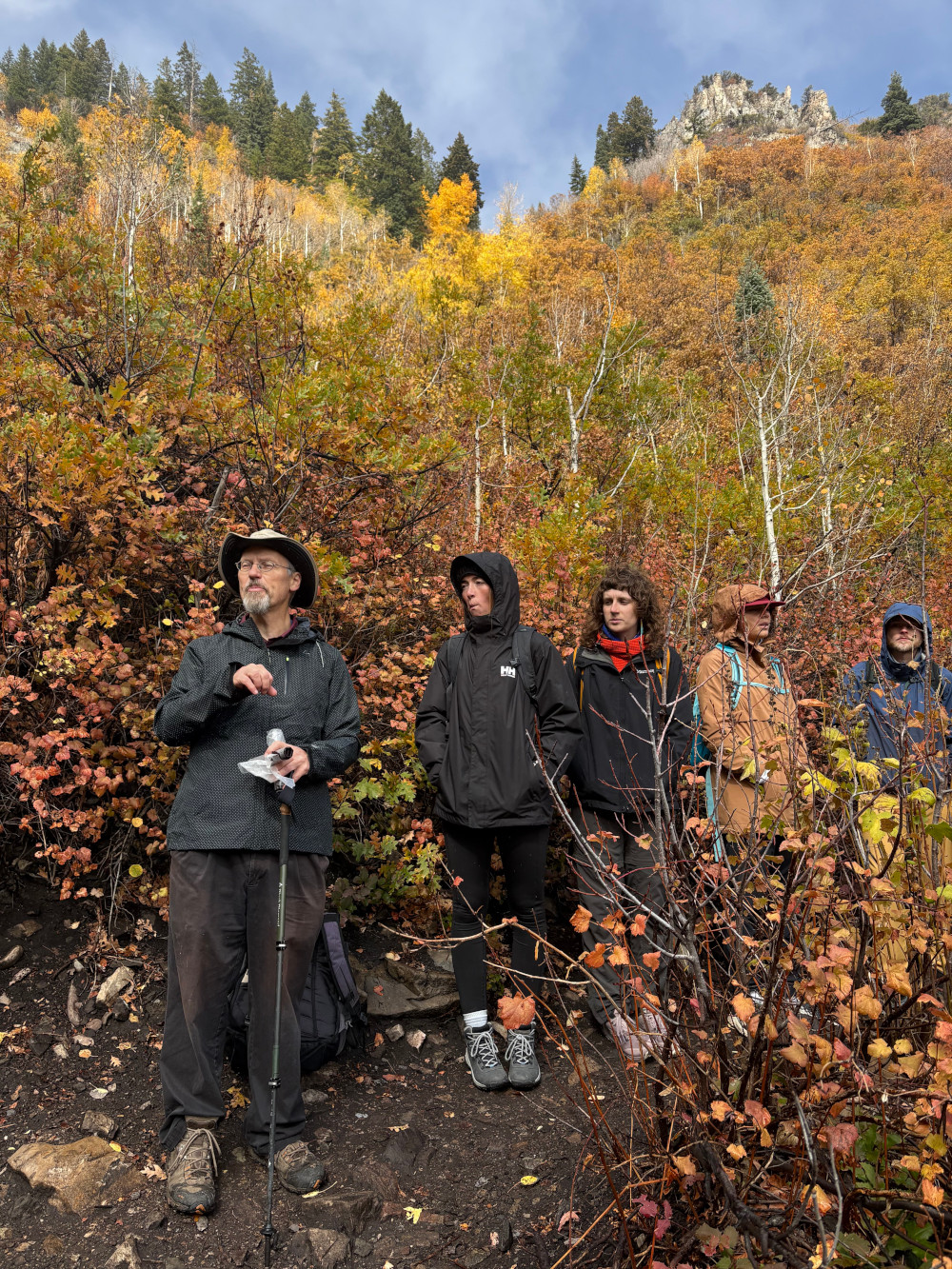
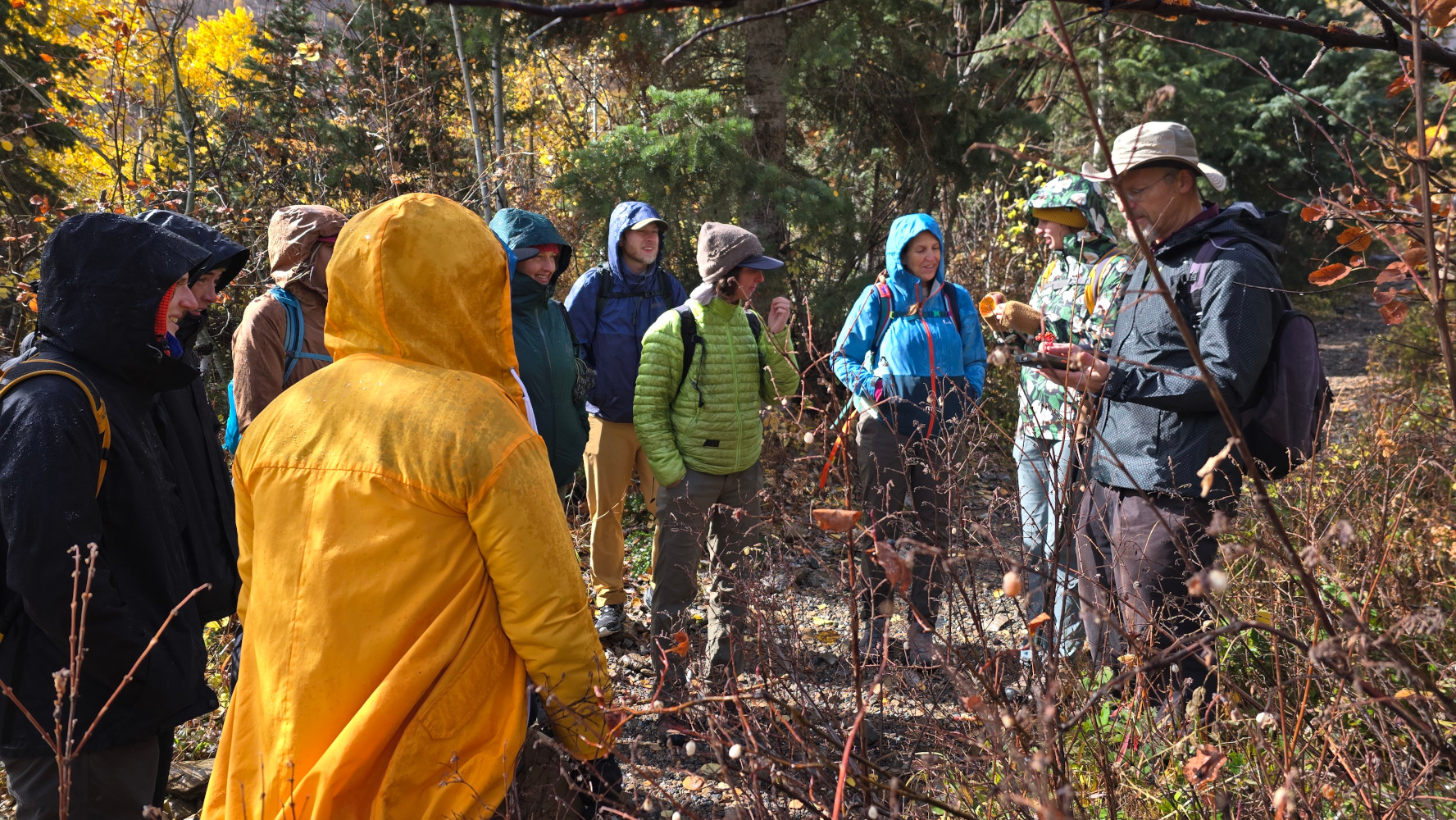
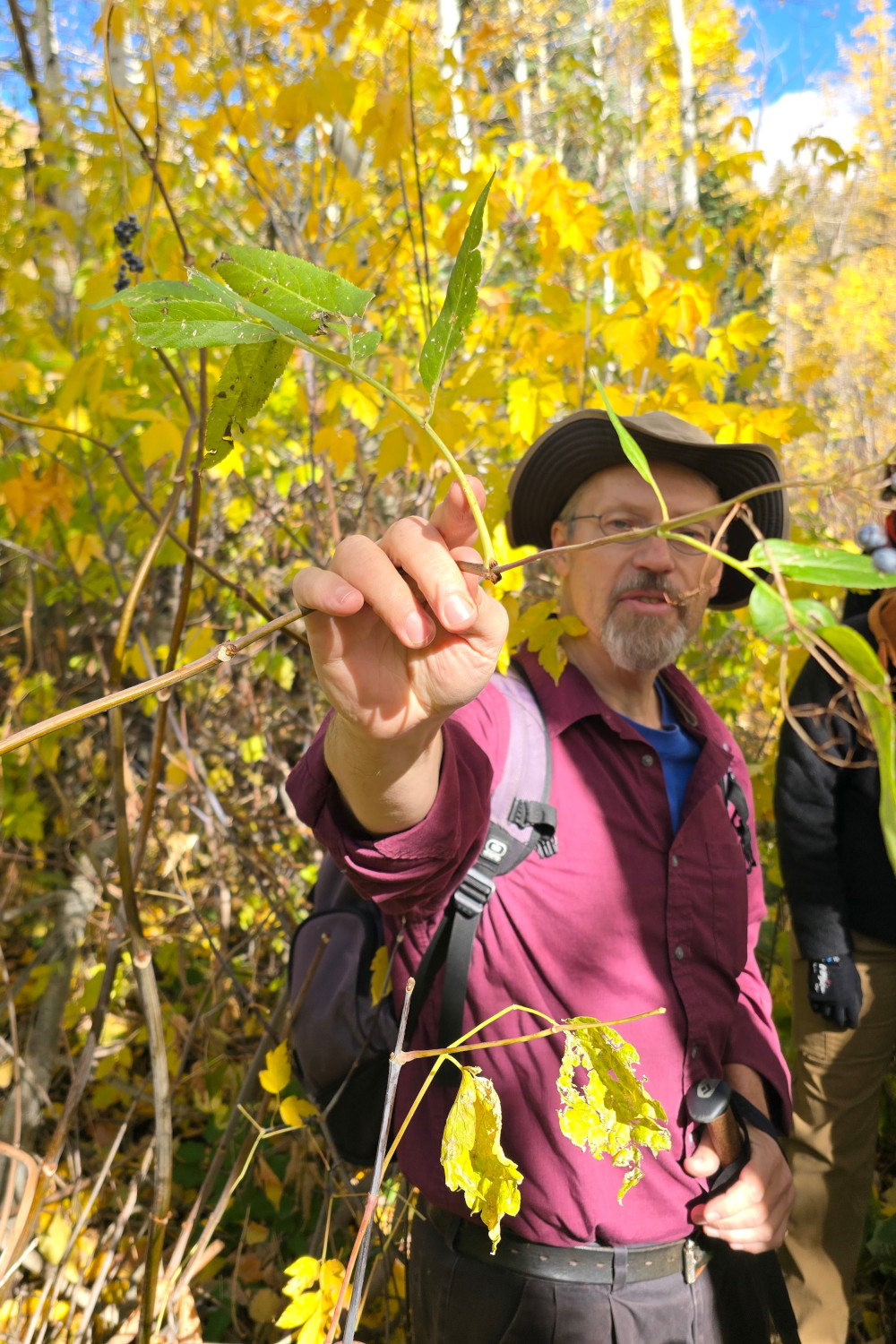
On October 15th, 2025, I lead an edible plants hike for the Utah Outdoor Recreation Summit at Aspen Grove Trailhead. This is a annual conference put on by the Utah Division of Outdoor Recreation. It brings together government agencies, nonprofits, businesses, and community leaders to talk about how outdoor recreation supports Utah’s economy, communities, and quality of life.

On the second day of the summit, they offer a variety of outdoor sessions, doing activities such as hiking, mountain biking, off-road vehicles, rock climbing, boating, and environmental preservation activities. They asked me to lead a foraging hike this year. They told me that out of all the available activities, the foraging hike was the first to fill to capacity. This shows that foraging has the interest of many people, and even with all the recent books which have been published, is probably still lacking enough experts to serve the needs of those who are interested in learning more.

Before heading off to their various locations the groups met up at Rock Canyon. While waiting for stragglers, I was able to teach them about hackberries which grow at this location and are one of the most important plants for winter foraging. We munched on a few berries from the trees there, and tasted hackberry milk, which I make by blending up the berries with water, in the same way one would make almond milk.

We all drove up to the Aspen Grove trailhead parking lot, where I gave a short introductory talk about foraging. Then we proceeded to look at edible plants near the parking lot, such as elderberries and oregon grape. After that, as often happens in the mountains, the weather started to turn on us, and did a few things, including rain and hail. The participants braved it all rather well, as we looked at raspberry bushes with no berries left. And as it rained on us, I was able to show milkweed and mullein, and explain the many edible, medicinal, and other uses for those plants. They are two of my favorite natural sources for firestarting materials, but unfortunately with the rain, there were no actual firestarting demonstrations that day. 

The weather cleared up as we made our way up the trail. As with many of these hikes we did not get very far, because we stop so often to learn about the plants. As we progressed up the trail, I was able to show them edible plants such as oak (acorns), chokecherry, serviceberry, as well as medicinal plants such as yarrow and motherwort.

October is very late in the season for really good foraging, but there was still a good variety of plants around, even as the leaves were changing colors and falling off. We were able to find several kinds are berries, which are always the highlight of fall foraging, including elderberries, serviceberries, chokecherries, and oregon grape. Some of the braver people also sampled mountain ash berries, which are nominally edible, but taste terrible. There were rose hips, a few acorns, stinging nettle. The raspberries and milkweed were far past their edible stage, but the milkweed in the fall is excellent for making cordage and starting fires, at least when it is dry.

The medicinal plants we talked about included the yarrow, motherwort, and mullein mentioned above, but also catnip, juniper, deer brush, and goldenrod.

We did not get far enough up the trail to see everything I had seen when I scouted out the area a few days previous. But farther up the trail there was fireweed (dead), thimbleberry (dried), mountain gooseberry (very few left), bittercress, and brook saxifrage. Most of these were old or dead, so while it may have been good to see the plant, they probably didn't really miss out on anything good to eat this late in the year.

I lead at least 12 edible plants hikes this year. This was the highest profile hike I did. But I'm planning on doing more next year. Click on the subscribe link to receive notifications of events.

Arctostaphylos uva-ursi
Ericaceae

Arctostaphylos uva-ursi

Bearberry

Bearberry
Bearberry

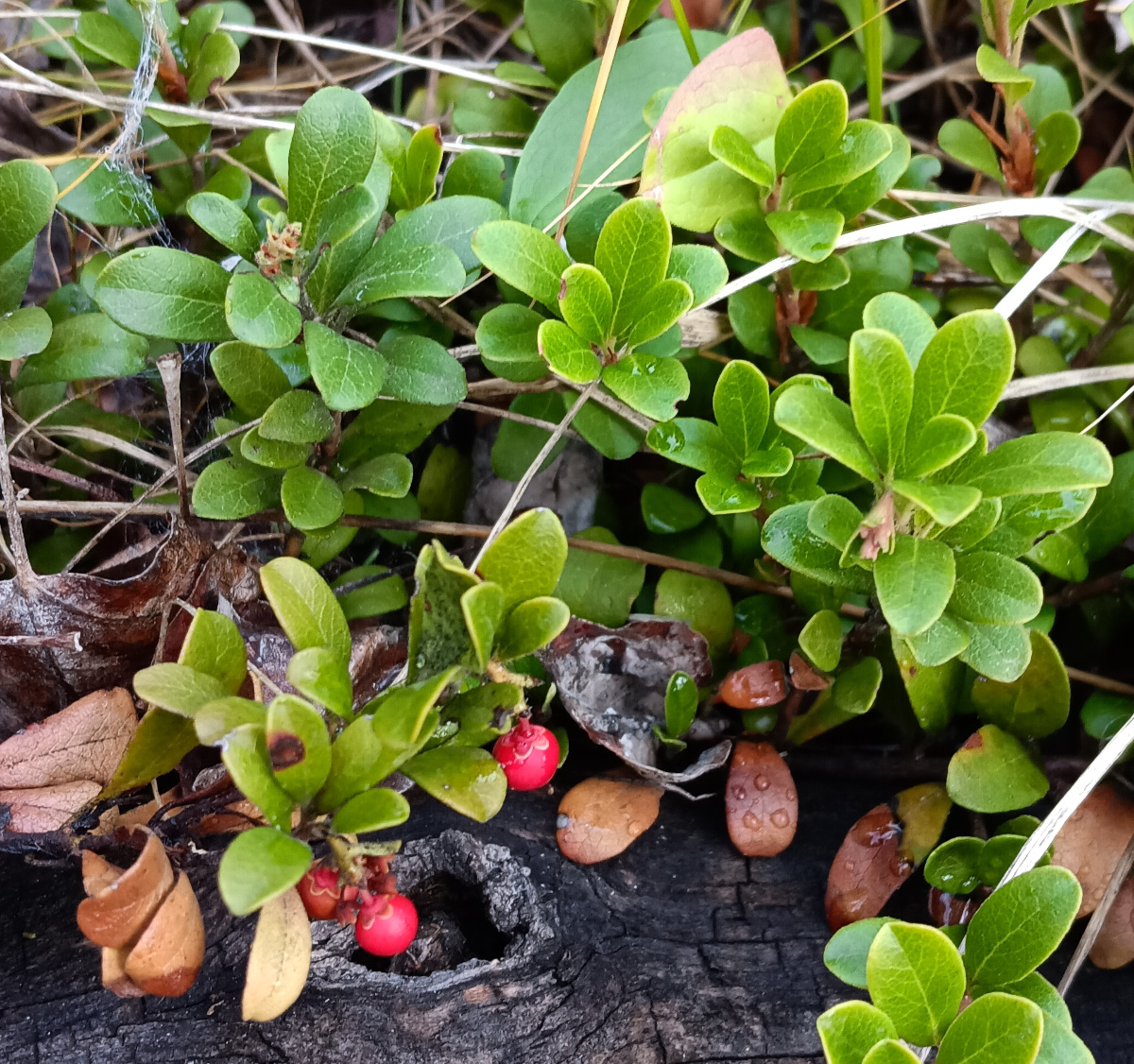
Arctostaphylos uva-ursi is best known as a medicinal herb, especially good for urinary tract infections. But it also has edible berries, called Bearberry in English. The botanical name comes from the word for Bearberry in Greek (Arctostaphylos) and Latin (uva ursi). It is also known as Kinnikinnick in some American Indian languages.

The plant is a very low growing shrub, often hugging rocks, and only getting about 6 inches tall. The leaves are fairly tough (like manzanita, a closely related plant), 1-2 inches long, and obovate in shape, which means they are pointed at the stem end, and round at the far end. In the fall, the small bright red berries will be ripe. In my region, these plants are only found at high altitudes, but farther north they are more common and can be found in Canada and Alaska. The berries are ripe in the fall when other better-tasting berries are well past their season and no longer available.

When raw, the berries are somewhat dry, have a mealy texture, and not much flavor. The become sweeter when cooked, either boiled in water or cooked with grease. The water-boiled ones are somewhat sweet, and juicier from the water, but still have a mealy texture. The ones I fried in grease were similarly sweetish, and had less of the mealy texture, but the flesh inside had shrunk during the cooking. The best flavor seems to come from cooking in oil and pounding or grinding into a coarse powder. The pounding helps break up the seeds. They are still not good tasting enough that I would want to eat it very often.

Many tribes of the American Indians ate the berries for food in various ways. Moerman's "Native American Ethnobotany" has an unusually detailed recipe:

Fruit cooked in grease, pounded, mixed with raw fish eggs, and eaten. Approximate proportions of the ingredients were 1 tablespoon grease, 1½ cups fruit, and 2 tablespoons whitefish [or salmon] eggs separated from the adhering membrane. A little sugar was added for flavor. After the fruits were lightly cooked in grease, they were pounded until they were crumbly. They were then placed in a heavy cloth folded to make a sack and pounded with the back of an ax head. The fish eggs moistened the pounded fruit.

I tried preparing the fruit according to this recipe, except that I used a coffee grinder to grind the fruit to a powder, cooked it in a small amount of grease, then used tomato guts instead of fish eggs to moisten it. I didn't have fish eggs, but I thought the insides of a tomato would have a similar texture. When prepared this way, the flavor is fairly good. It has a good sweetness from both the bearberry and the tomato, though it is hard to find a flavor to compare it to. It has the texture of coarse gruel along with a few hard bits of seed that the grinder wasn't able to pulverize completely. This method of preparation is much more palatable than my previous attempts. 

Vaccinium caespitosum
Ericaceae

Vaccinium caespitosum

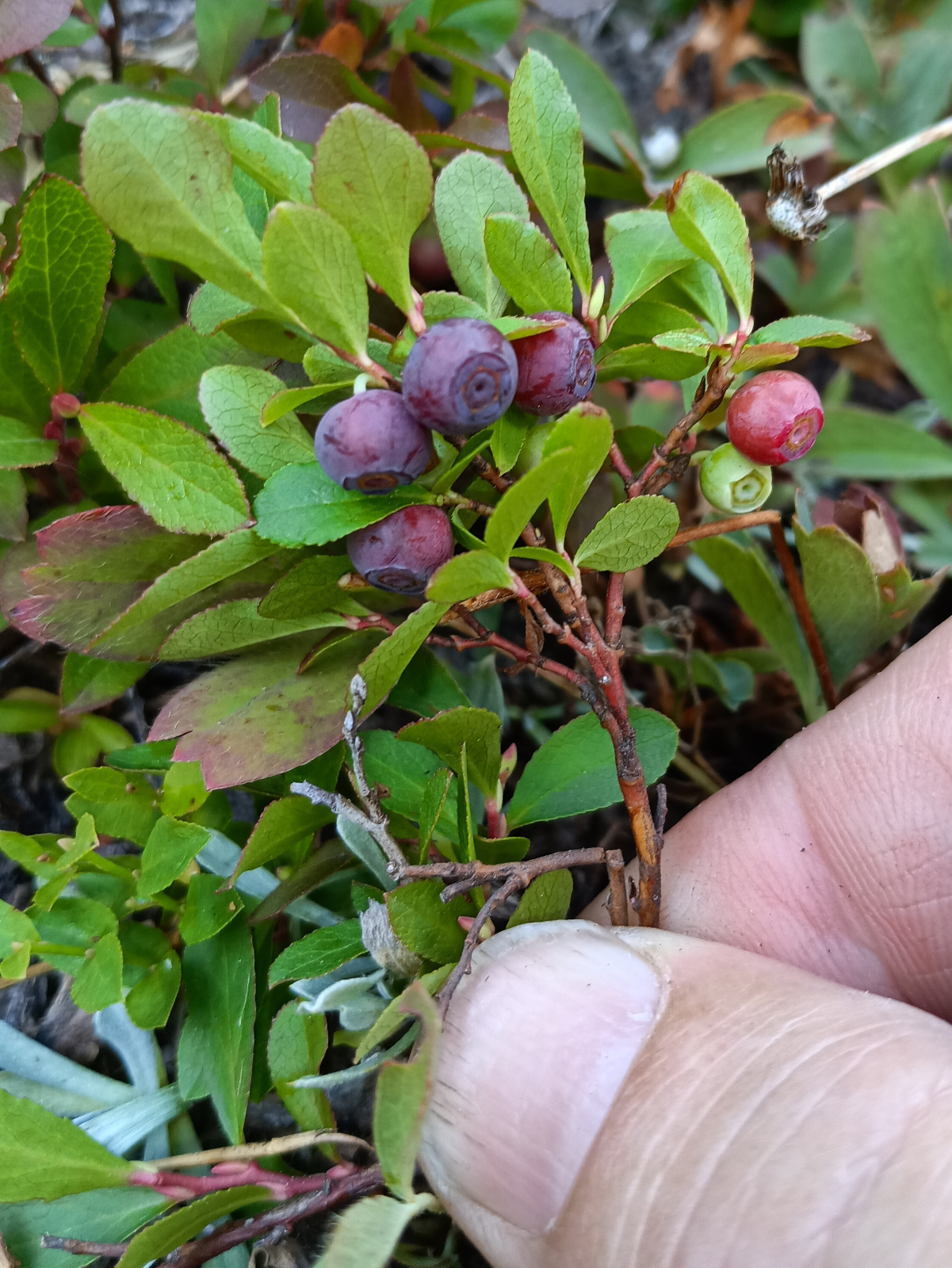
Dwarf Bilberry

Dwarf Bilberry plant
Vaccinium caespitosum

I have known there is a dwarf species of bilberry or huckleberry that grew in my region, but I never thought I would find enough of it to make it worth eating or seeking out. That has now changed.

I was down on hands and knees picking Alpine Wintergreen (Gaultheria humifusa), a berry everyone likes a lot, when I noticed some bilberry shaped berries growing at the edges of my wintergreen patch. They were on tiny plants only 2-3 inches tall, so I realized I had found the dwarf species of bilberry, Vaccinium caespitosum, commonly known as Dwarf Bilberry. And there were several ripe berries on each little plant, so it probably produces more fruit than normal bilberries, in terms of fruit per area, although I doubt that the plant is nearly as common as the normal bilberry. It certainly is not as noticeable, because it is so small, and the berries are mostly hidden under the leaves. 

Dwarf Bilberries are worth seeking out, because the berries have a very excellent flavor. They are somewhat like the typical bilberry or huckleberry, but they also have a fresh fruity taste which is distinctly noticeable. Definitely a winner in terms of flavor.

Look for Dwarf Bilberries if you are at high elevations or north in the Rockies. They can be found growing in meadows which are not too wet or too dry, along with other plants of similar stature. If the other plants are larger, they easily get over-shaded and out-competed. It doesn't like soil as thin as alpine wintergreen thrives in, but can grow in only slightly better soil, as shown when I found it growing next to alpine wintergreen.

Saxifraga odontoloma
Saxifragaceae

Saxifraga odontoloma

Brook saxifrage

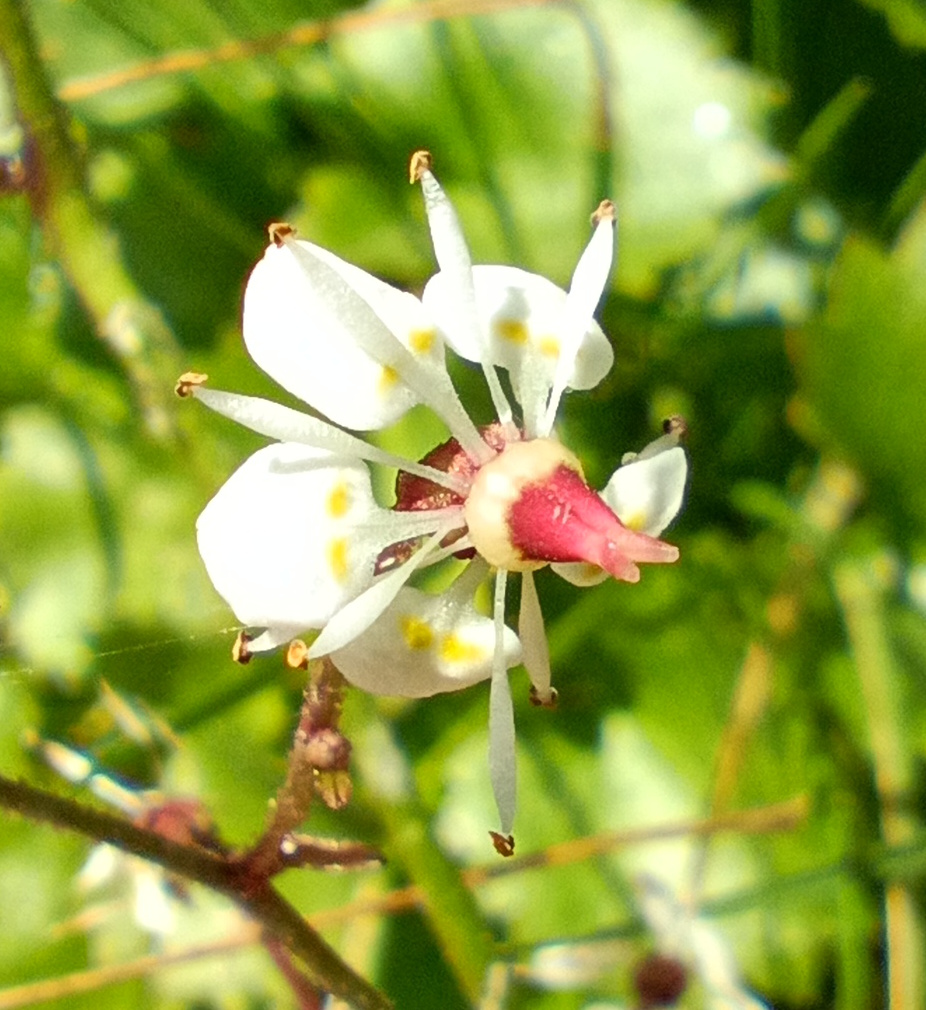
Saxifrage flower
Saxifrage flower

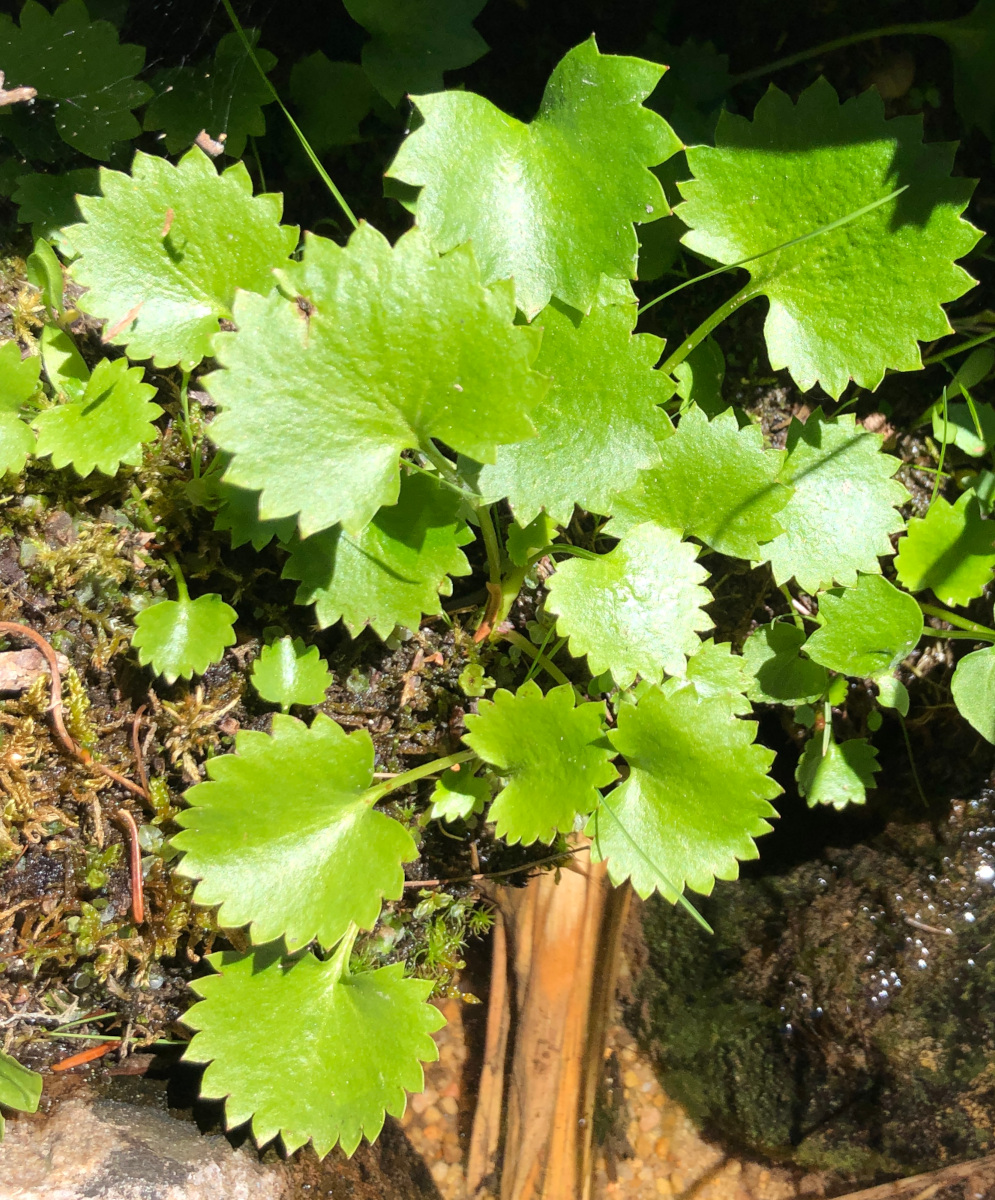
Brook saxifrage is one of the most common plants found on the banks of swiftly flowing mountain brooks, and seems to need that specific environment. You might occasionally find it in boggy areas if there is a stream nearby, but never in dry areas. It is easily recognizable from the leaves which have large even teeth, like fancy edges cut into paper. The flowering stems are leafless, and have many branches with small white flowers which are very pretty to look at. The flowers have five petals, ten stamens with wide (petaloid) filaments, and a 2-parted style. The latin name, Saxifraga odontoloma, has been changed due to genetic research. Newer references will call it Micranthes odontoloma instead.

Saxifrage leaves
Saxifrage leaves

The leaves are edible, but even though they don't taste bad, they don't taste good either. They seem mostly tasteless to me. And the texture is rather tough, especially in older, larger leaves. They are thicker than an average leaf, so there may be more food bulk in them at least. After cooking, even for 15 minutes, they taste nearly the same as they do raw, and they are very nearly still as tough as they are raw.

So, there isn't much here to excite me to eat these often. At best, I think they could be added to a recipe to give it more food bulk, and make it more filling.

Load More